



🎉Wishing you a Happy and Healthy New Year from Better Shea Butter 🎉

0 products
View all
Learn & Explore
View all
shea cocoa mango

Body Butter Formulating Basics | Mango, Shea and Cocoa Butters vs Oil Percentages

Ok girls (and boys), so you want to get the basics down on body butter formulating? I got you. 

One important thing that I have learned in my best school days is that a solid foundation is everything. Once you have the basics down, you can build your own castle.

How does this apply to skincare formulating? I’ll tell you, just pay attention and don’t get distracted by the next reel, tiktok or blog.

Formulating a skincare product is very similar to cooking any meal. There are only a few basics, master those and you will see the light – meaning you will see through every label and every beautiful marketing ad crafted by the best communicators.

First a list of truths:

  1. Most (about 95%) of skincare products, whether they are for your face or body, have water as their main ingredient. The average % of water in a lotion or face cream, high-end or CVS-level skincare, has 70-80% of water. WATER, the one you drink.
  2. If there is water in a lotion, you also must have a preservative to prevent mold and yeast from growing, and an emulsifier to keep the water from separating from the other ingredients. Preservatives are used at 1-2%, and emulsifiers can vary a bit more, but are usually 5-10%.
  3. That means that in your average skincare or face-care product, you have 10-20% to play with to add what we know as moisturizing or skin-enhancing ingredients. These can be as basic as shea butter, cocoa butter, coconut oil, vitamin C, etc.

Can you do me a favor and read all that one more time?

If you read it again and let it sink in, you will have the foundations of how to make a lotion, a cream, or a serum:

Water

Emulsifier

Preservative

Butters/oils/skin-benefitters (I just made up a new word!)

Can you create a skincare product that is better than average?

Yes and no, it depends on your goal and it depends on how old your skin is, because let’s face it, gravity and time are real, and they affect how our skin develops from birth to death.

From teens to your late 30’s

All you need to do is:

  1. Protect yourself from the sun, because if you don’t you will develop brown or age spots.
  2. Keep your skin moisturized consistently or it will lack water and oils and it will age faster

From late 30’s onward

  1. Keep protecting yourself from the sun with a good SPF lotion. The sun UVB and UVA rays still come through and will age your skin EVEN WHEN IT’S CLOUDY.
  2. Decide on a skin routine that works for you. Using only natural products will make you feel better, but wrinkles will happen, and loss of collagen resulting in loss of mass and increasing loss of tone will also happen. Gravity is real. 

Enough of that, how do I formulate a great body butter?

I’m glad you asked, let’s get down to it. 

Homemade body butters are 100% butters, oils and enhancers (colors, essential oils, and other cool ingredients). That means NO water. That means that you have 100% of your formula to play with using all the wholesome ingredients we are passionate about.

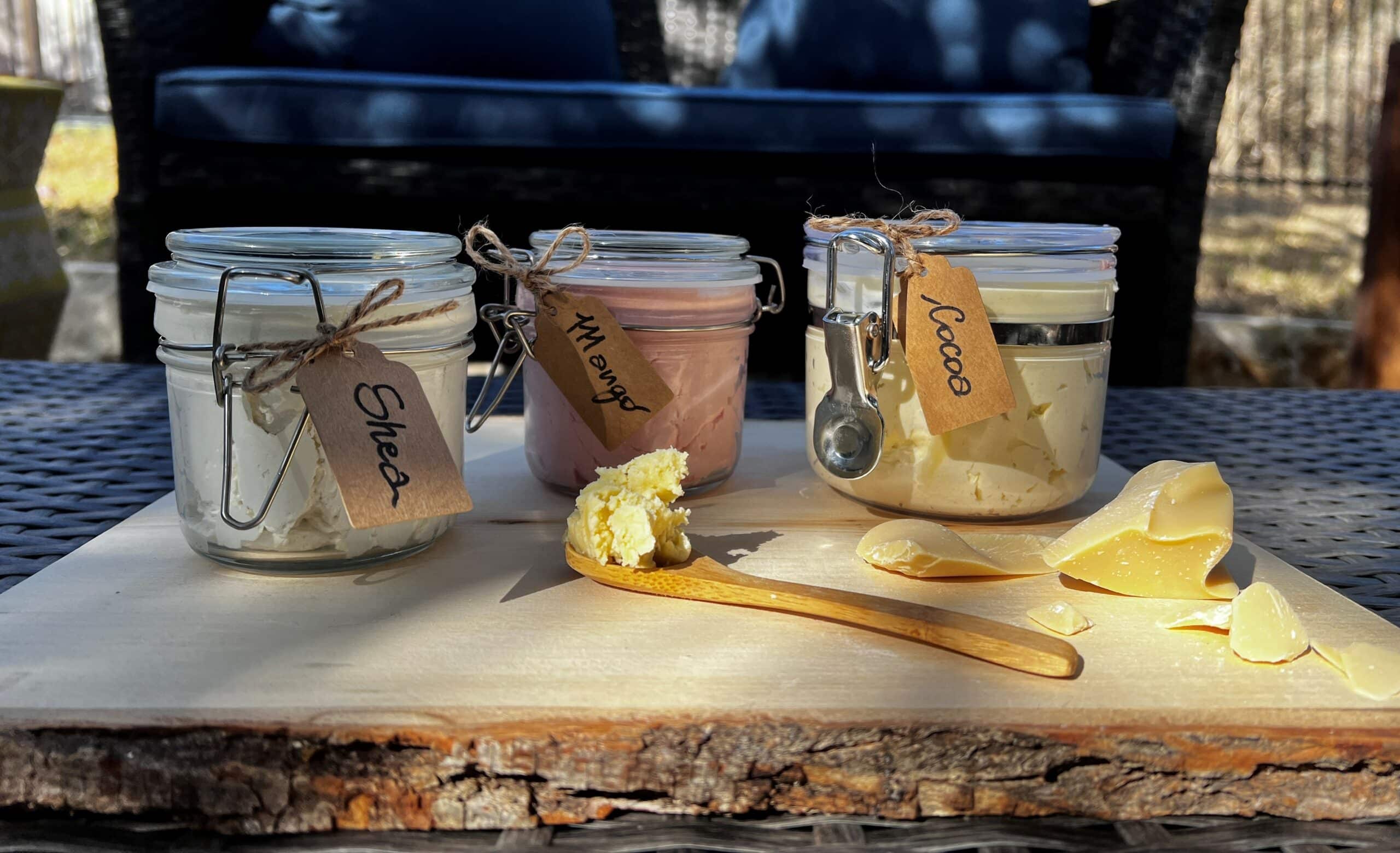
So, the first ingredient you consider is your base butter. The most common and popular ones are:

1. Shea Butter

2. Mango Butter

3. Cocoa Butter

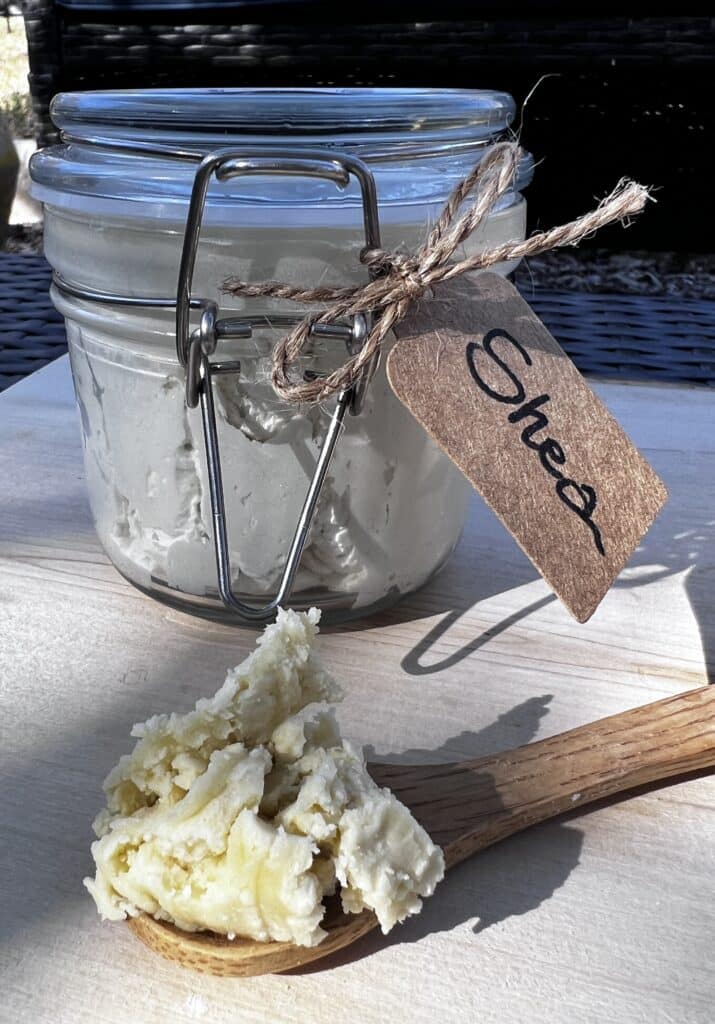
Use Shea Butter if your skin is dry, if you want to load up in yummy antioxidants, and if you want to support co-ops of women in Africa whose life depends on how much shea butter is consumed worldwide. Shea Butter has a natural nutty/smoky scent, unless it’s refined, which I never use and do not recommend because refined shea is stripped of a lot of its inherent nutrients. The nutty smell affects the final scent of your body butter whether you add essential oils or not.
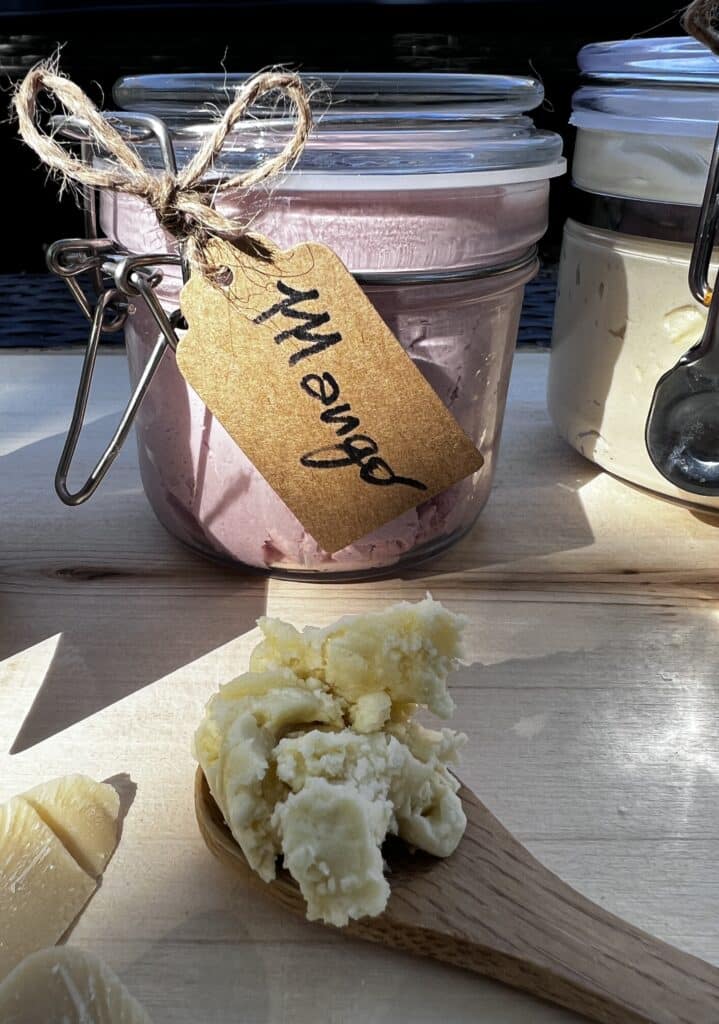
Use Mango Butter if you love shea butter but you do not like its inherent smokey scent, or if you think shea butter is a little too heavy and rich for your skin type. Also, mango butter production involves more than just women, and mangos are grown mostly in India, so if you want to support that part of the world, Mango Butter is the butter to choose. Mango Butter is unscented, thus allowing any scents you add to have an unadulterated final smell. 
Use Cocoa Butter if you are concerned with loss of skin elasticity, stretch marks, or if you have scars that you want to fade. Cocoa Butter is more international than Shea and Mango, it is mostly sourced from Africa or Mexico. Cocoa Butter smells like chocolate and its scent will affect your final product. 
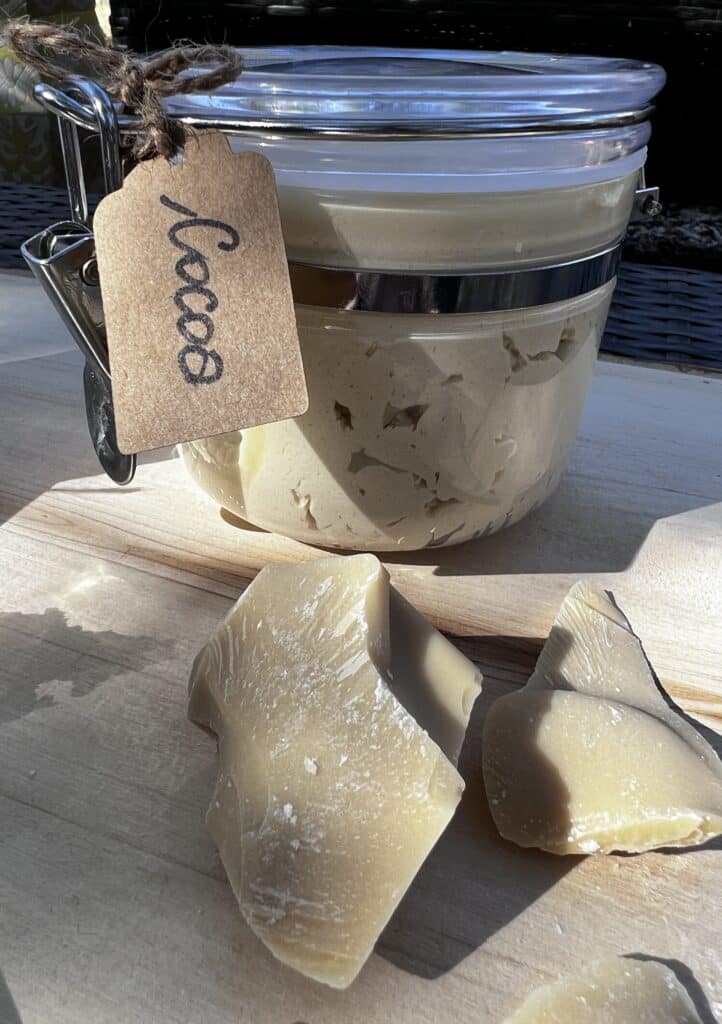
Basic formulas using the three top butters

After years of formulating, here are the basic formulas in percentages that will give you an easy-to-apply body butter. 

  • 70% Shea Butter
  • 30% Oils

  • 60% Mango Butter
  • 40% Oils

  • 50% Cocoa Butter
  • 50% Oils

Sticking to these basic percentages in your formula will yield a body butter that is semi-soft, easy to whip and easy to apply on your skin. Here’s a video to show you how they look.

I hope this helps lay the foundation to your skincare formulating journey. Check all our DIY videos to get inspiration and leave a comment or question if you need any help. 

Happy DIY!

29 responses to “Body Butter Formulating Basics | Mango, Shea and Cocoa Butters vs Oil Percentages

  1. FINALLY! I’ve always sought this sort of simplistic approach to creating my butters (and lotion). I SO appreciate you sharing your “secret”. This will help SO much. Thank you!

    1. You have two options:
      A. You use more oil and less butter
      B. You use a formula that contains water, but you will then also need to add an emulsifier and a preservative

    1. Works great. Thank you for sharing How would be the ratio when I want to combine sheabutter and cacao butter with oil?

      1. Hello Karin, the key to this is using a good ratio of carrier oil. In this blog here, we discuss oil ratios for the 3 most popular butters: shea (soft), mango (medium) and cocoa (hard): https://bettersheabutter.newbird.co/body-butter-formulating-basics-mango-shea-and-cocoa-butters-vs-oil-percentages/
        If you would like to combine shea and cocoa, the best ratio to use would be the mango ratio as the hardness level of the butters is right in the middle. 

          1. Yes, if it is a mix of all three equally this will give you a semi-soft butter. Customers mention that the mango butter butter-to-oil ratio works well for a blend like this.

  2. This is so helpful, thank you! How would I work out the ratio if I combined shea, cocoa and mango butter into one butter? Or would this not be advisable?

  3. This is greatly appreciated.
    If I want to use ghee, Shea butter and ovacado and coconut oil for dry skin. What formula would you recommend?

    1. I have never tried a skincare recipe with ghee, maybe someone else from our customers can chime in in the comments 🙂

  4. How about if I want to mix 3 different butters. Eg Sheabutter, mango butter & kokum butter? What formula would I use please?

    1. Keep the butters at 60% total of your formula, and the oils including essential oils or fragrance at a total of 40%.

    1. You add up the number of jars you have, and multiply it by the volume of the jars. This will give you your total amount of ounces available and you can calculate the ratio of your full recipe from there

  5. Thank you for sharing this. I have been trying to formulate my own butter but can’t seem to figure out how to avoid the fullness/ashiness that occurs hours later? I lowered my arrowroot % so I can still have my velvety feel and non-greasy feel but the. A couple hours later my skin looks very dull. What can I do to keep the moisturized (non dull) look on the skin please?

    1. Hello Keisha, that is a great question! Many customers like to add a natural wax such as carnauba wax to their recipes to add more protective barrier properties to their formulations and lock in moisture. Waxes such as beeswax are also humectant in addition to this barrier quality, and will additionally draw more moisture into the skin.

  6. Hello! I l know this is an old post, but I am looking for ratios to use kokum butter & oil; lanolin & oil, cupacu & oil.
    This is the list of ingredients I want to us but not sure of the ratio of butter to oil;
    Cupuacu butter
    Kokum butter
    Mango butter
    Lanolin
    Apricot kernel oil
    Fragrance/essential oil

    Do you have a recipe or amounts of each I should use? I am horrible at math with percentages.
    Thank you!

    1. Hello Andrea, it sounds like the 60/40 (mango butter) ratio or the 50/50 (cocoa butter) ratio might work best for your formulation since you plan to use two semi-soft butters (mango, cupuacu) and one hard butter (kokum) .

      Another option customers have mentioned trying is a ratio in between these such as 65/35. I haven’t tried using lanolin in formulas so I’m not sure how it would affect the final texture. It might be helpful to make small test batches using different ratios to find your ideal formulation 🙂

  7. I have these ingredients that I would like to make a whipped body butter, but I am not sure of the amount to use of each. I am looking to see if anyone has a recipe, I am not good at math with the percentages and such.
    Cupuacu butter
    Kokum butter
    Mango butter
    Lanolin
    Apricot kernel oil
    Fragrance/essential oil

    Or if you have the percentages of each butter to the percentage of oil, I can probably figure it out.
    Thank you!

  8. If I want to add essential oils, how would that be calculated? Is it included in the percentage of oils in the recipe?

    1. Hello Candy,

      Many sites that sell essential and fragrance oils will also include essential oil calculators based on the recipe or formulation that you would like to make, also depending on the area of the body where it will be applied.

  9. Hello Isabella!
    Thanks for all the amazing content you share
    I have tried the Shea butter one and after whipping it, it has remained very liquid… What could have been the problem? Thanks!

    1. Hello Andrea,

      As it is very hot right now during the summer months and there are no stabilizing ingredients added to the natural butters or oils, it can affect the melting properties of the final formulation. Because of this, you can try adding more shea butter to the recipe, or another harder butter such as cocoa or kokum. Another additive that can help is a few tbsp of a natural wax such as beeswax or carnauba. Finally, you can also try adding some of a mattifying cosmetic powder such as arrowroot or a clay of your choice. I hope this helps!

  10. I have a problem in that I have melted my butter, added the oils and later when whipping it is very runny but suddenly it seizes up. What can I do to fix this? I have already added extra oil to ‘loosen’ it as advised by someone else. That didn’t help. How can I stop it from seizing into a hard blob? Thanks

Submit a comment

Your email address will not be published. Required fields are marked *